
By Elizabeth K. Lewis, CPA, Partner

Responsibilities when managing an endowment
An endowment is not just an investment account, it is a long-term promise to donors, governed by law, policy, and fiduciary responsibility. Understanding how endowments should be managed and where things can go wrong will help an organization fulfill their mission while reducing risk. Effective board oversight and management responsibility play an important role in ensuring the proper management of an endowment.
Board oversight versus management responsibility
Board responsibility should include establishing and regularly reviewing the investment policy to ensure assets are managed prudently, as well as defining a spending policy that aligns with both organizational goals and donor intent. The board also has the ultimate responsibility for ensuring compliance with donor intent: to honor the restrictions placed on endowment funds and avoid misapplication of resources.
Management is responsible for monitoring investment performance on a more daily basis and accurate financial reporting to the board. Management’s responsibility should also include clear and consistent communication with donors about how their contributions are being managed. This helps maintain transparency and foster trust with stakeholders to support long-term organizational success.
Endowment risks
Critical risks are the most common source of audit findings, donor issues, and regulatory scrutiny. They are largely controllable through policy, documentation, and oversight. Strategic risks deserve immediate CFO and board attention.
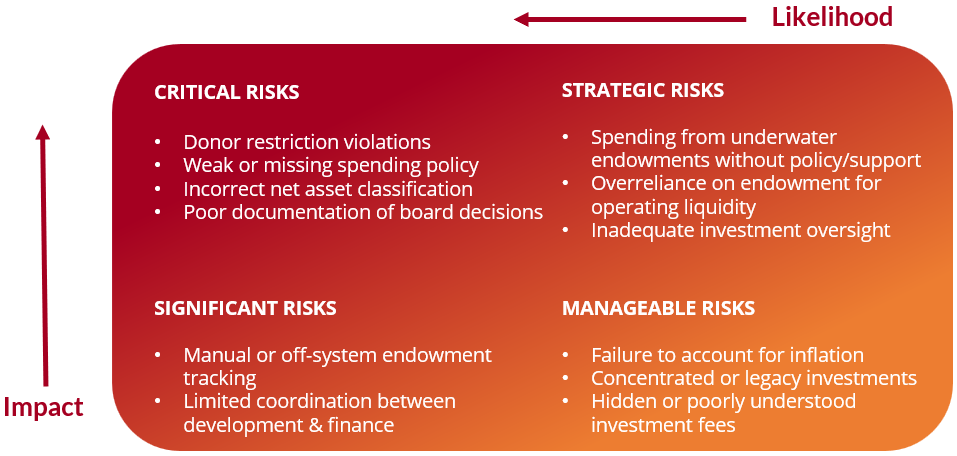
Key points about critical and strategic risks
Critical risks related to endowments primarily stem from misunderstandings or violations of donor restrictions. These include:
- Failing to clearly document donor intent, which can lead to misuse of funds.
- Improperly tracking endowment assets.
- Making unauthorized changes to restrictions without the necessary donor or legal approvals.
Confusing board-designated funds with donor-restricted funds can result in inaccurate financial reporting and governance errors, further complicating compliance and oversight.
Strategic risks often arise from the absence of formal or updated policies. Without a clear spending policy, organizations may make inconsistent withdrawals, undermining responsible management of resources. Outdated investment policies or limited board understanding of endowment restrictions can also jeopardize long-term sustainability. Other risks include basing spending on short-term investment performance and neglecting to adjust spending rates when the organization’s financial situation evolves, both of which can impact the endowment’s intended purpose and financial health.
Other challenges and considerations for endowment management
Investment management pitfalls
Investment management challenges often include insufficient diversification, the temptation to chase high returns, lack of thorough monitoring of investment managers, and hidden fees that erode returns.
Operational and internal control issues
From an operational perspective, issues such as poor documentation, inadequate segregation of duties, and manual recordkeeping outside the general ledger can weaken internal controls. Additionally, a lack of coordination between development and finance teams may create inefficiencies.
Audit and compliance pitfalls
Organizations may encounter unexpected findings during audits, inconsistencies in applying UPMIFA guidance, and insufficient documentation to support board decisions. Addressing these areas proactively can strengthen financial management and ensure adherence to best practices.
Managing endowments can be challenge, but our team is ready to assist you. Contact your Opportunity Advisor or Email | Call: 804.747.0000
About the Author

Elizabeth K. Lewis, CPA, Partner
Elizabeth is a Partner in Keiter’s Business Assurance & Advisory Services group. Her client base consists primarily of real estate investment funds, real estate companies, and not-for-profits.
Elizabeth specializes in auditing non-registered investment funds and possesses a comprehensive understanding of fund accounting and auditing services. She also serves on the Firm’s Real Estate and Not-for-Profit niche teams.
More Insights from Elizabeth K. LewisThe information contained within this article is provided for informational purposes only and is current as of the date published. Online readers are advised not to act upon this information without seeking the service of a professional accountant, as this article is not a substitute for obtaining accounting, tax, or financial advice from a professional accountant.